
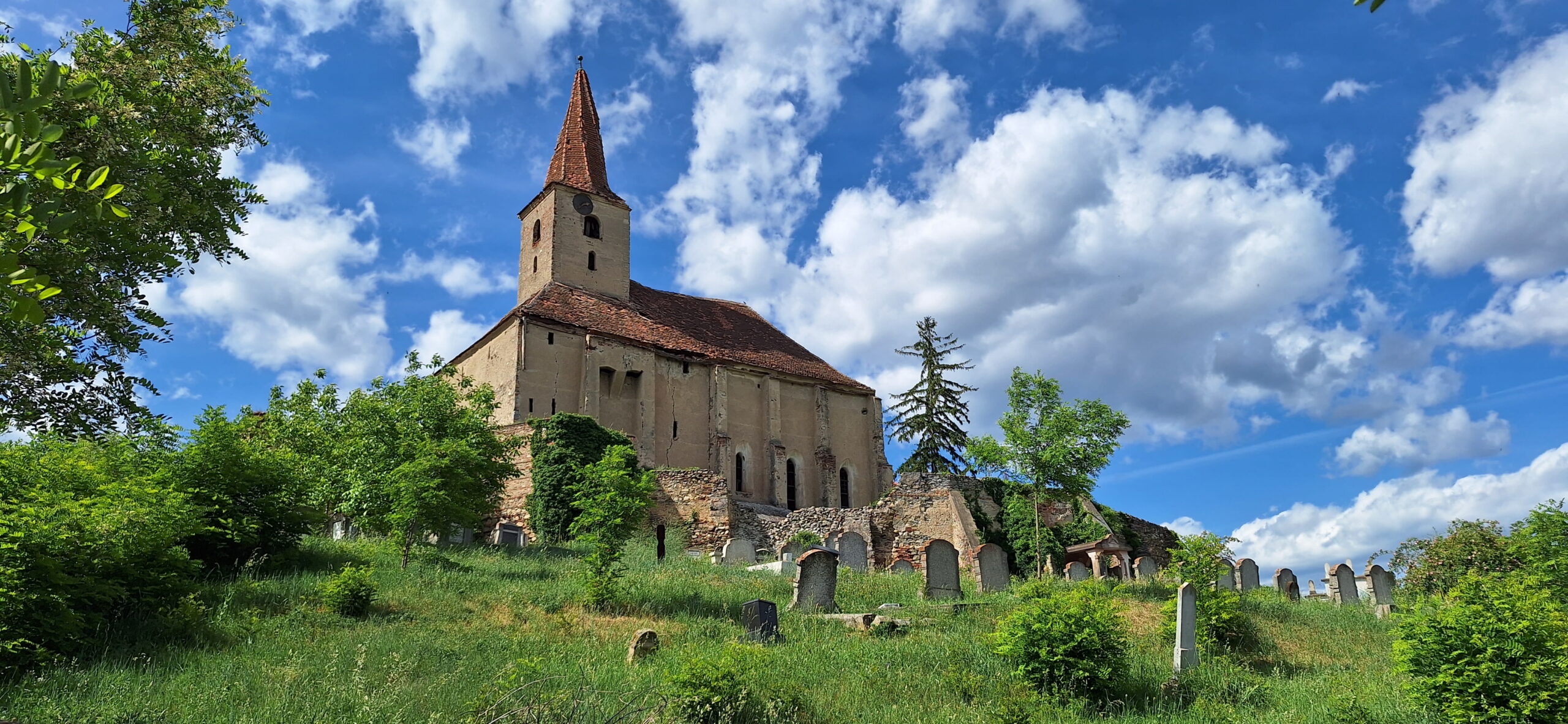
Dobârca (Doborka, Dobring) – Sibiu County
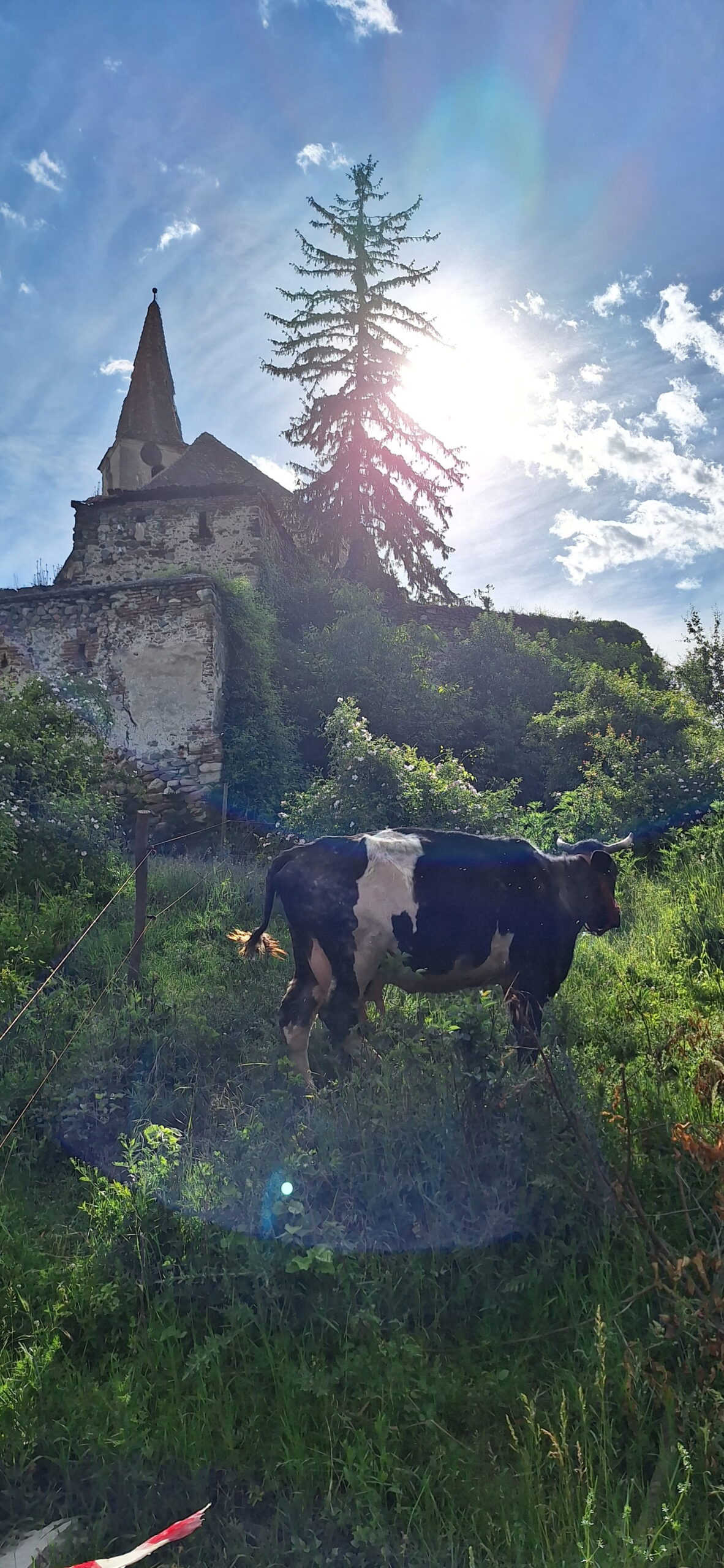
My destination came into view from a great distance, and the closer I got, the more I felt as though I were about to conquer an impregnable fortress in the Secaș Meadow. My visit to the fortified church of Dobârca remains one of the most adventurous, yet also one of the most impressive experiences of my entire „hunt” for abandoned historical monuments.
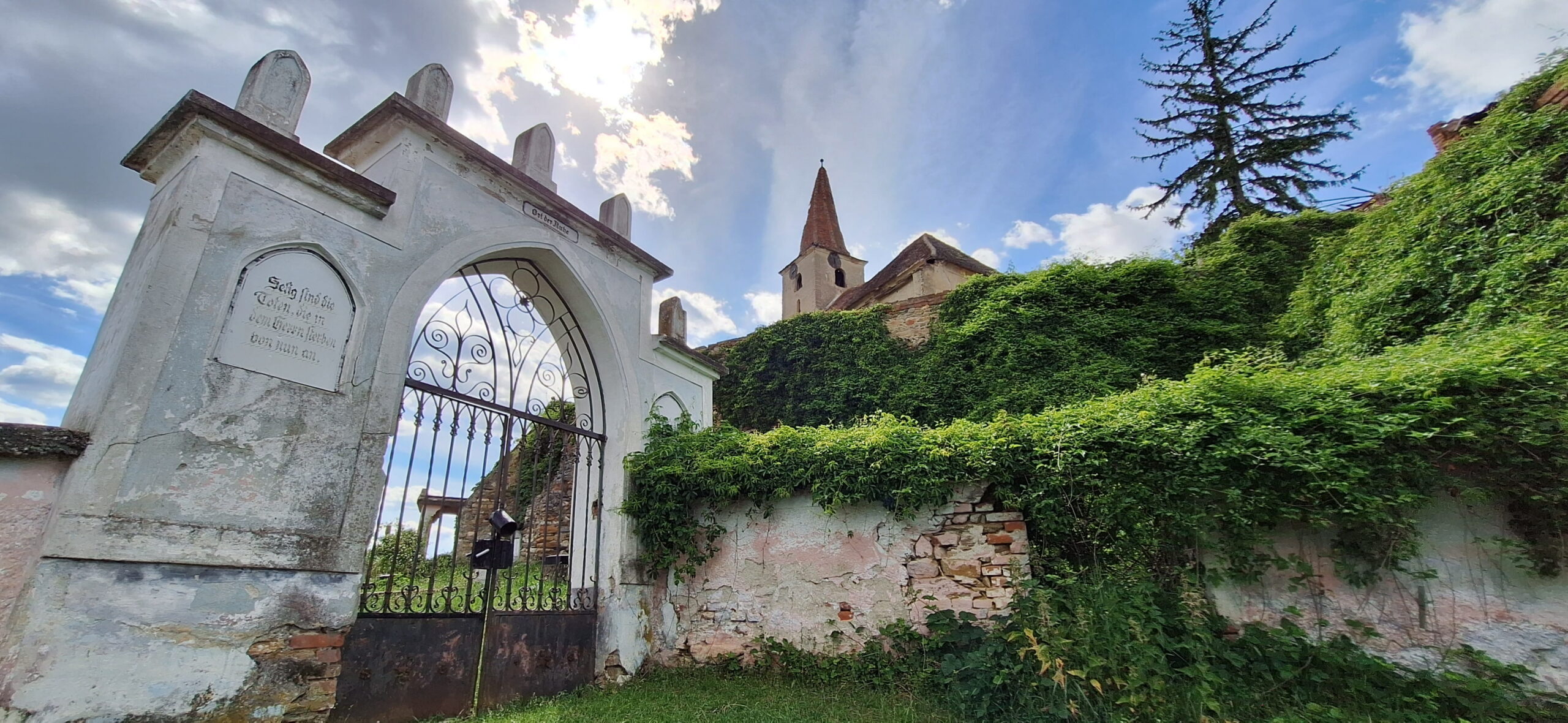
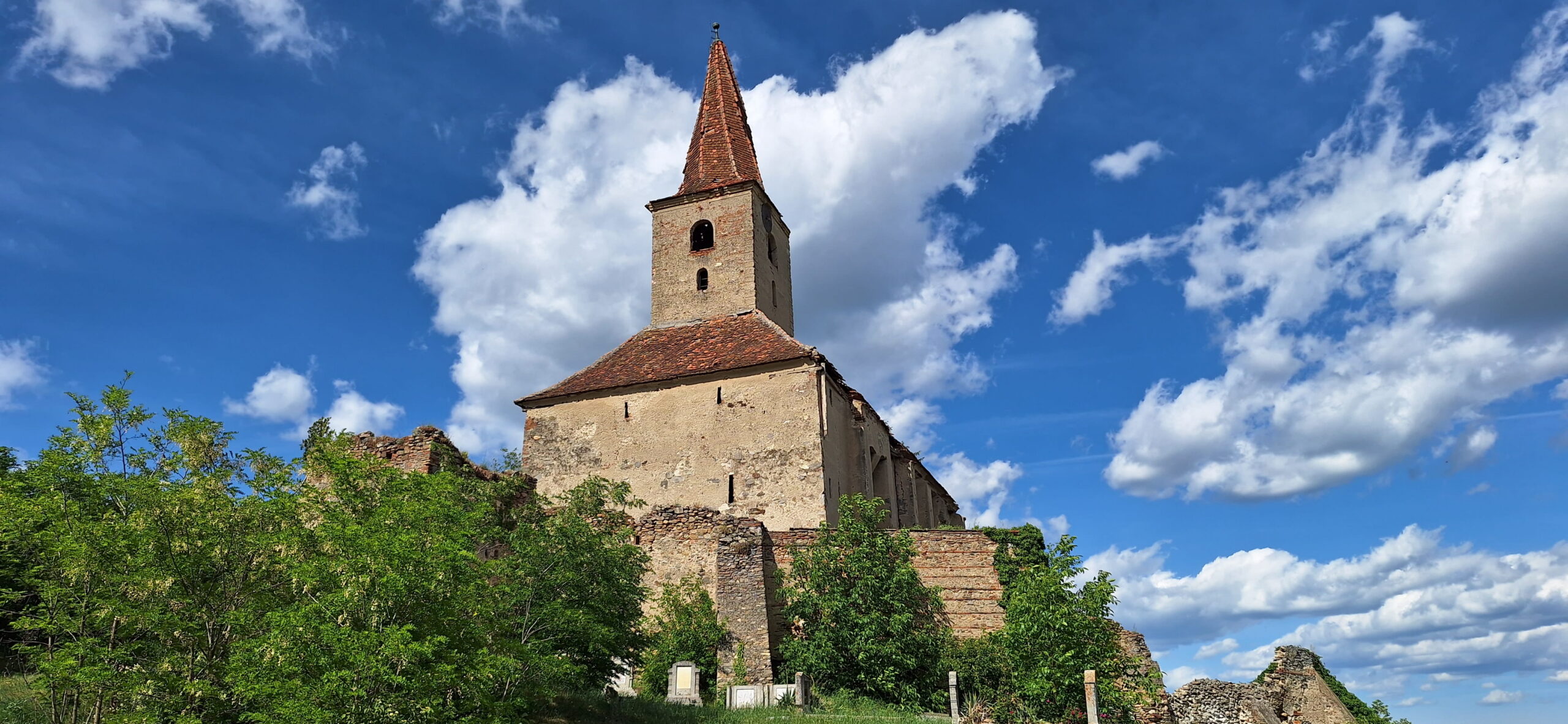
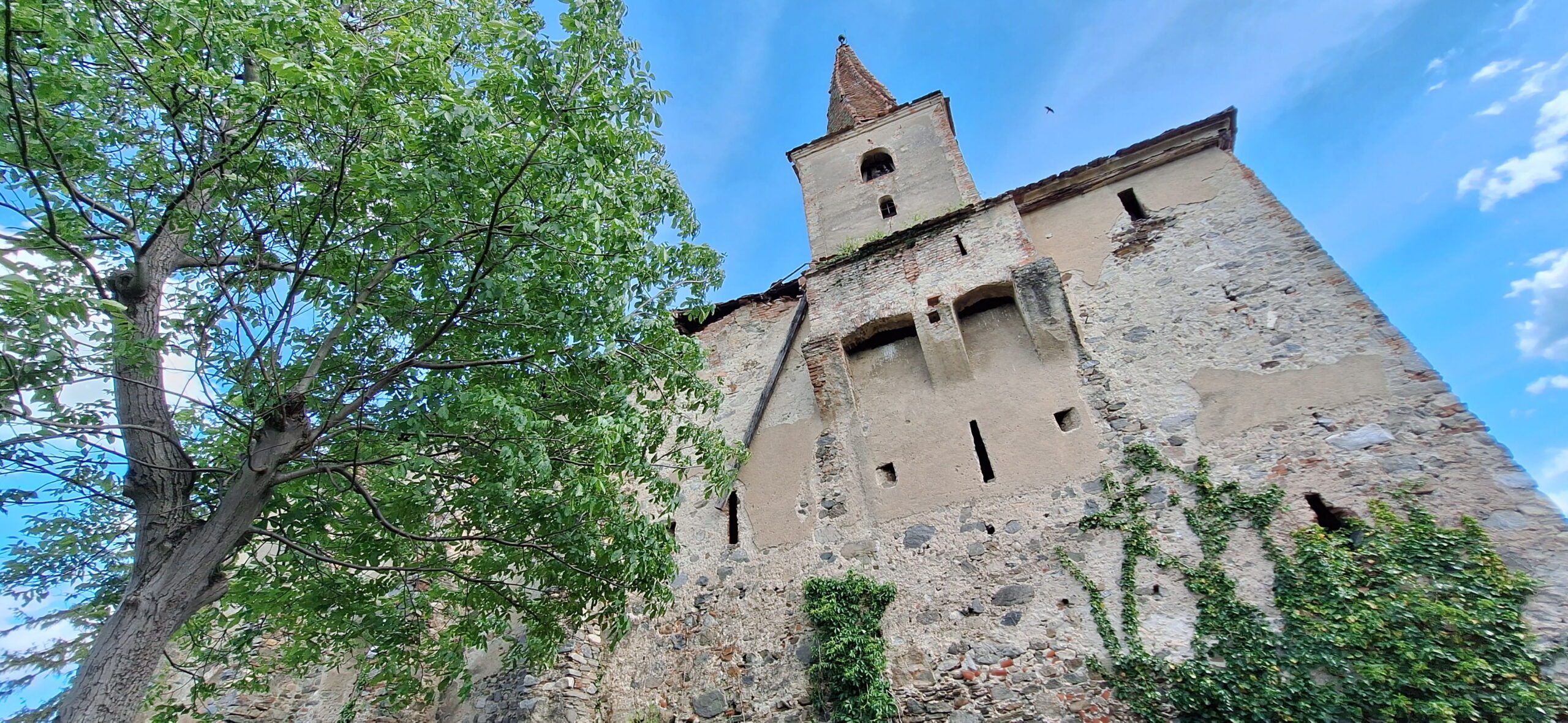
The Fortified Church of Dobârca – Eight centuries of history
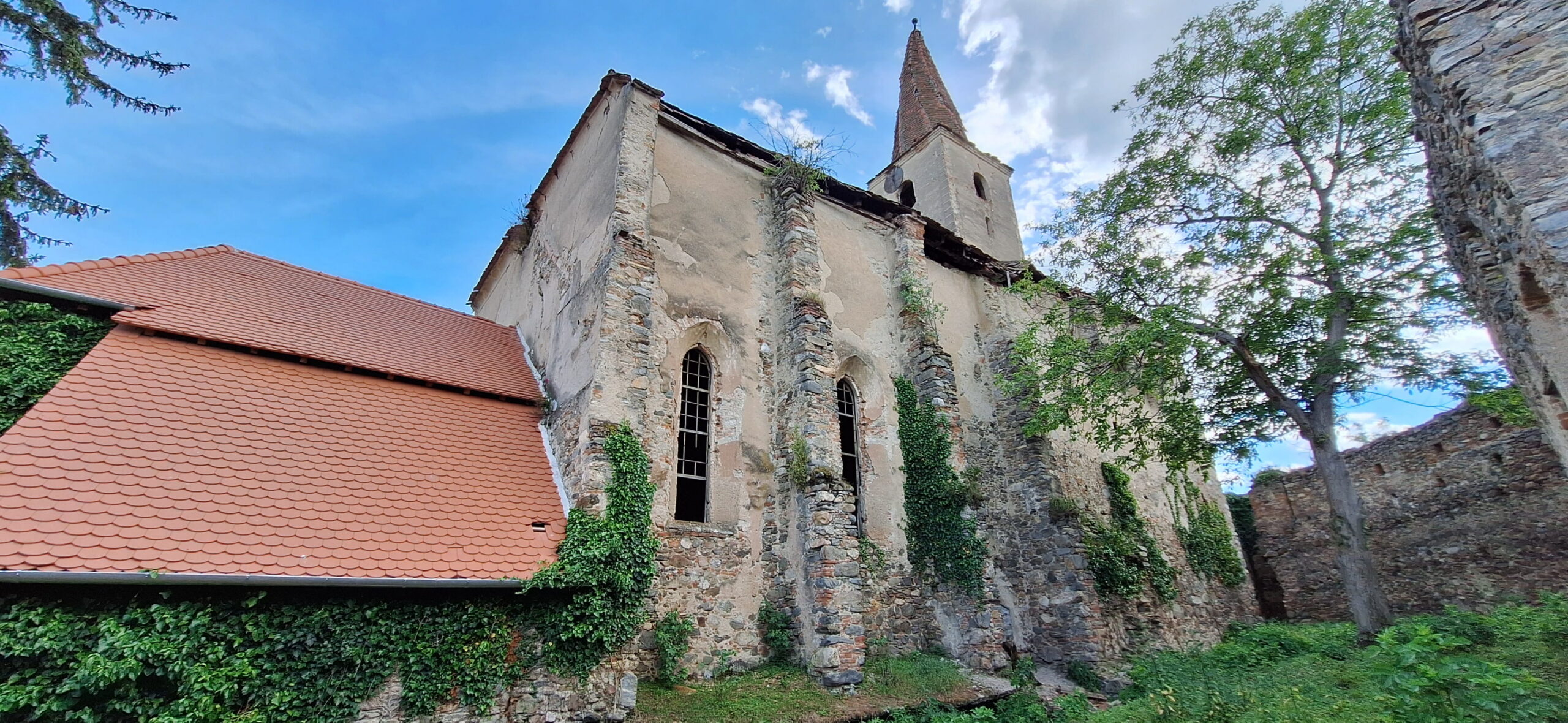
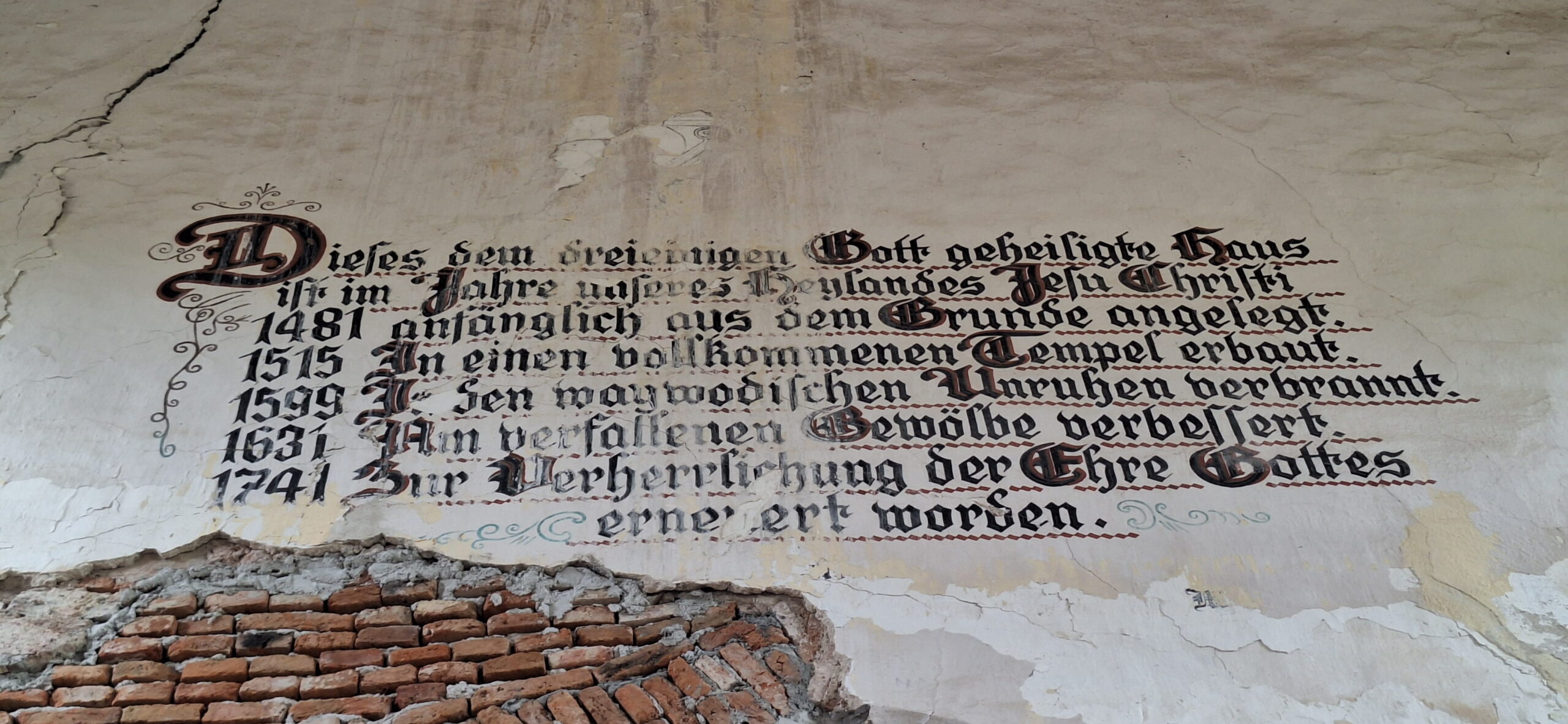
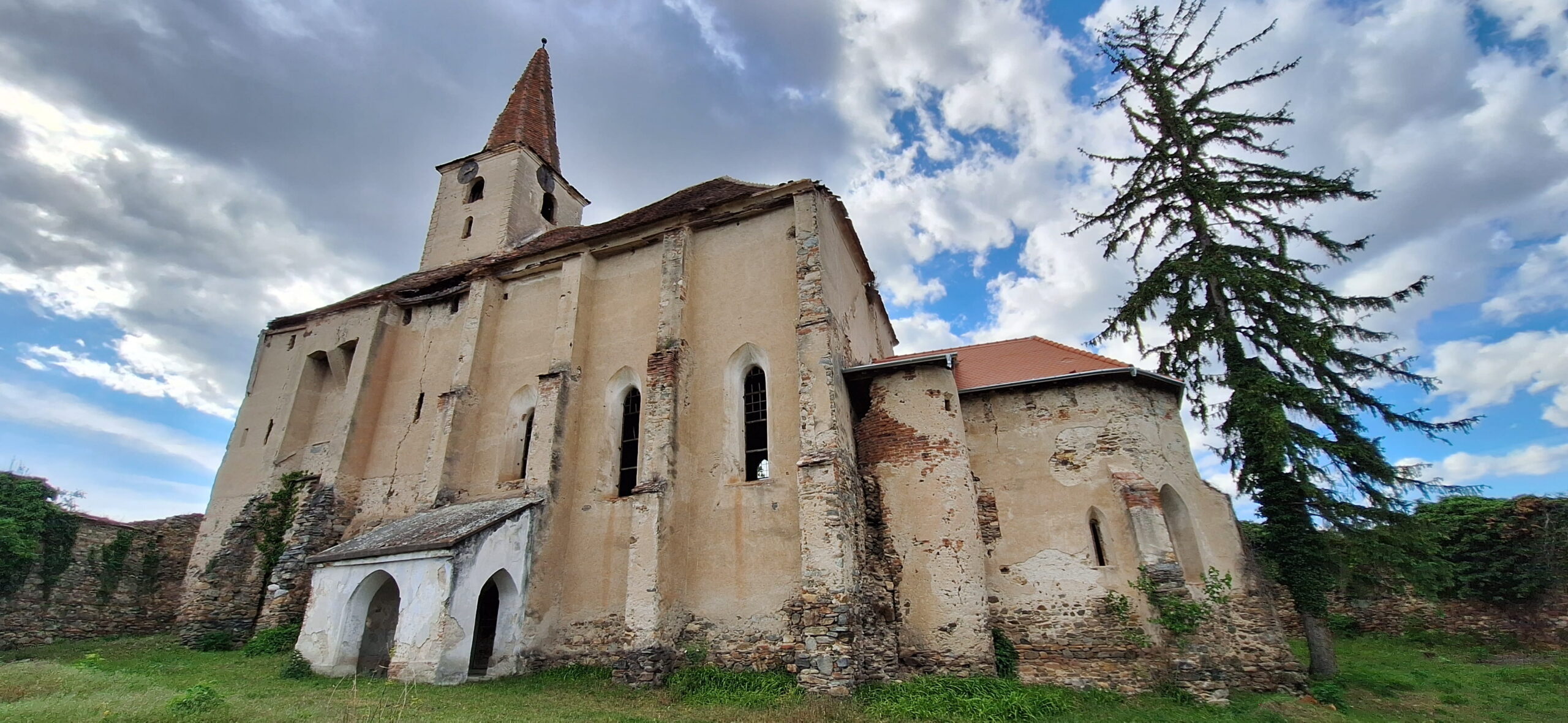
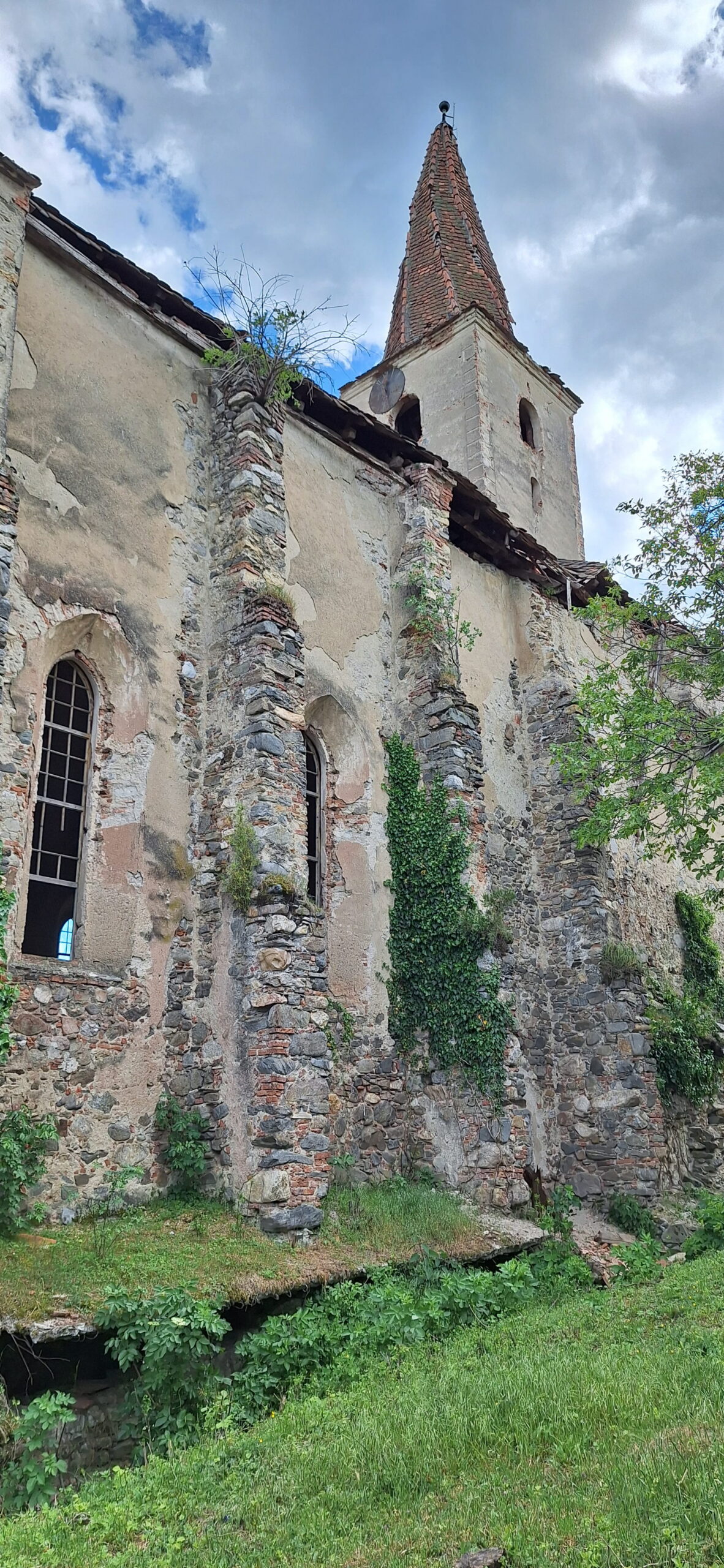
Dobârca, a village belonging to the town of Miercurea Sibiului, was first documented in 1309. The church, originally Roman Catholic and later Evangelical Lutheran, is even older, having been built as early as the mid-13th century. Situated on a hill in the northwestern part of the village, it was originally constructed as a three-aisled Romanesque basilica. In 1479, the fortified church of Dobârca suffered extensive damage after being besieged twice by Ottoman troops during the conflicts that culminated in the Battle of Breadfield. As a result, major reconstruction work was carried out on the church complex between 1481 and 1515, and the defensive walls were raised.
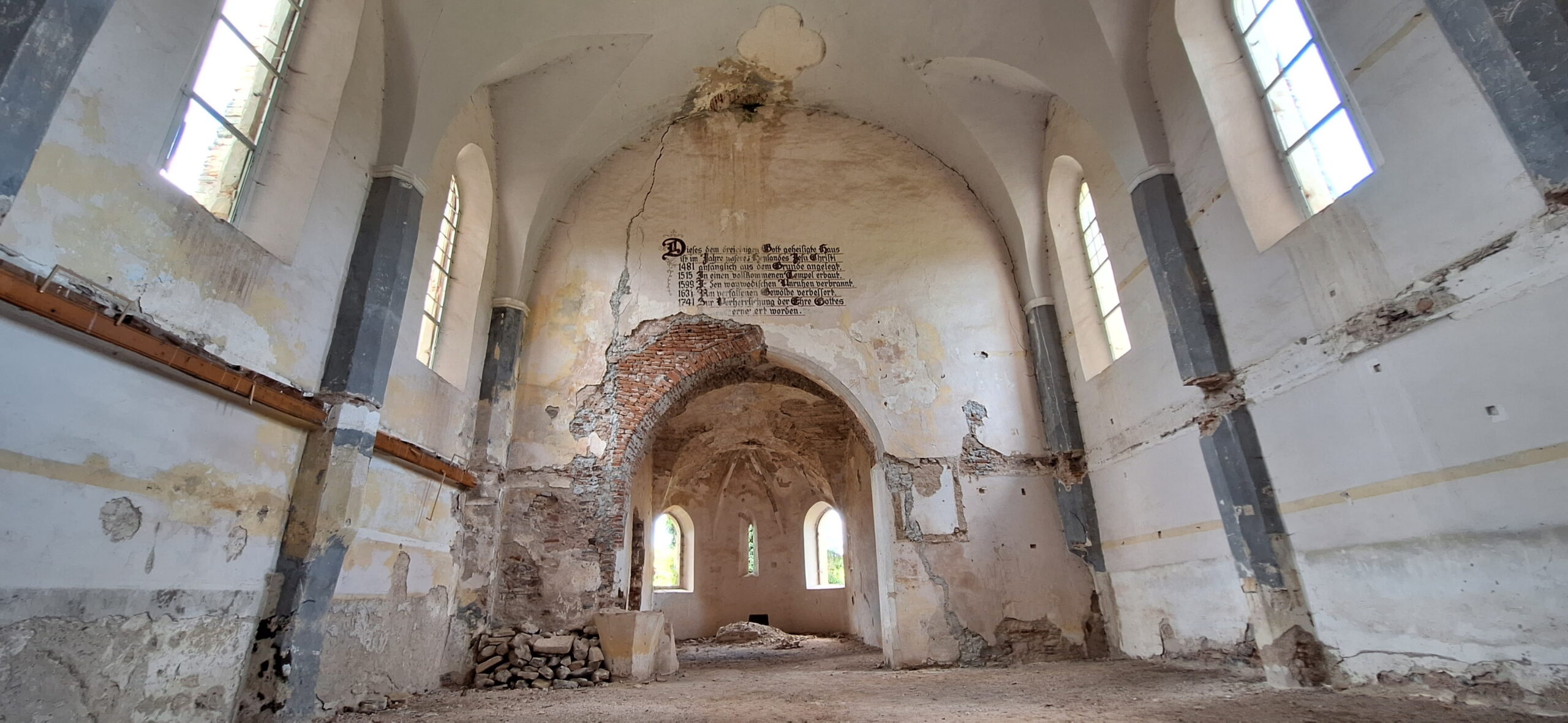
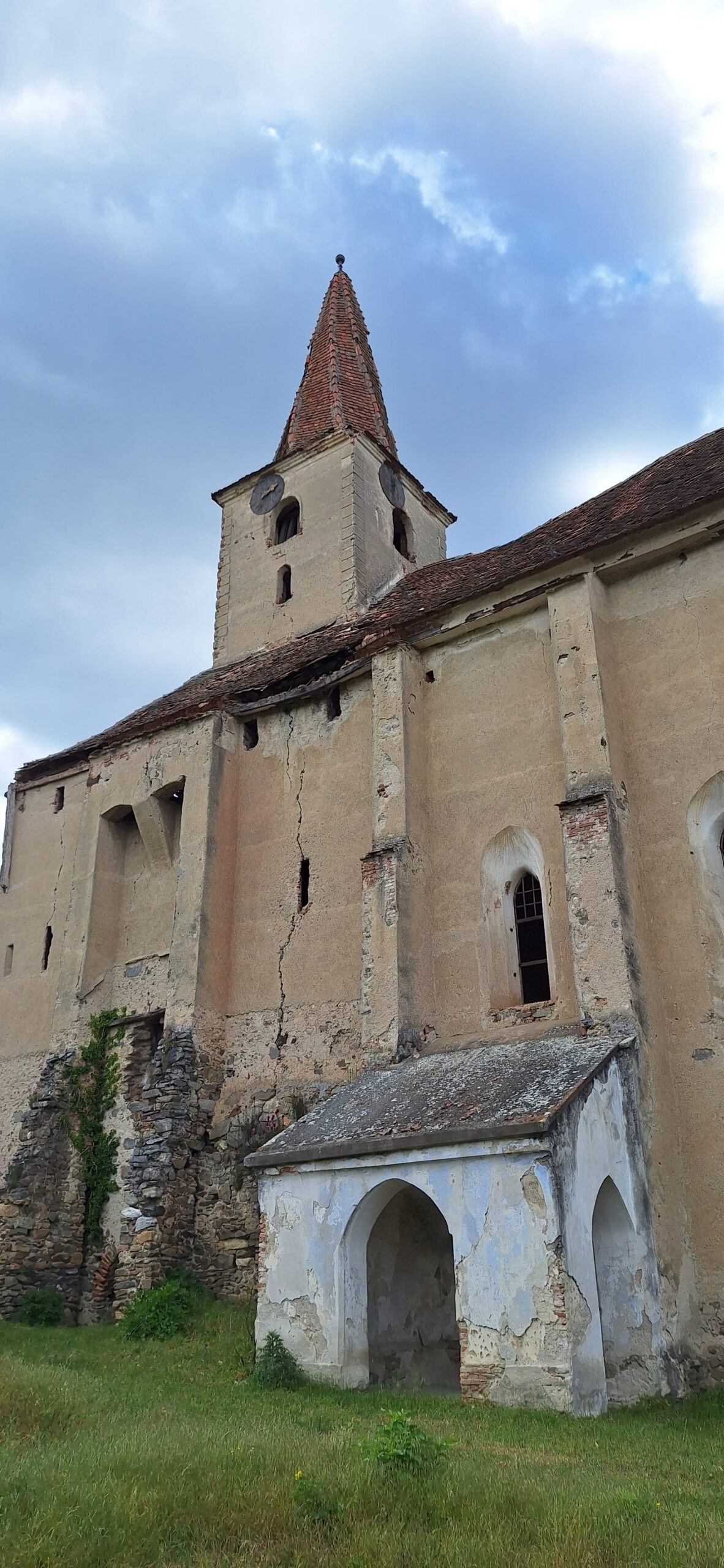
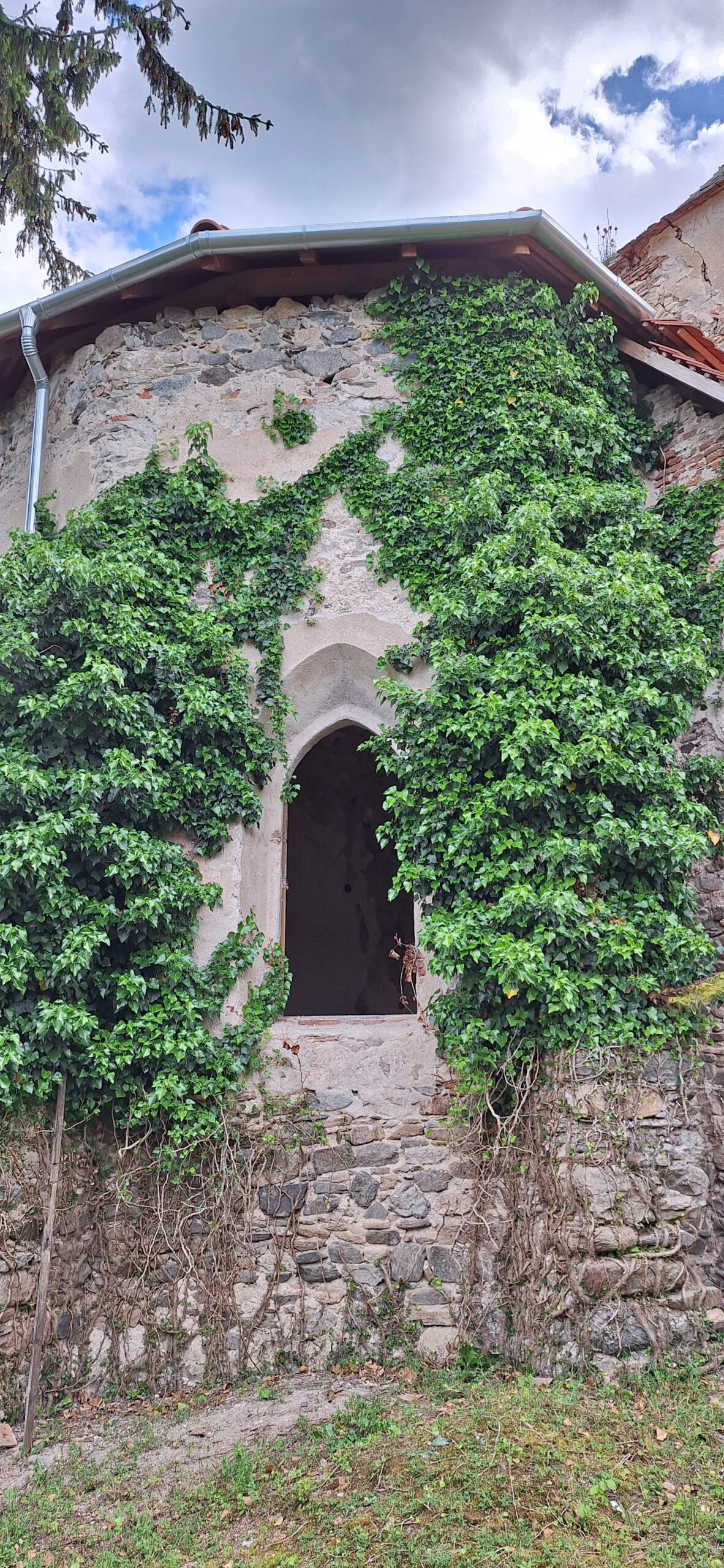
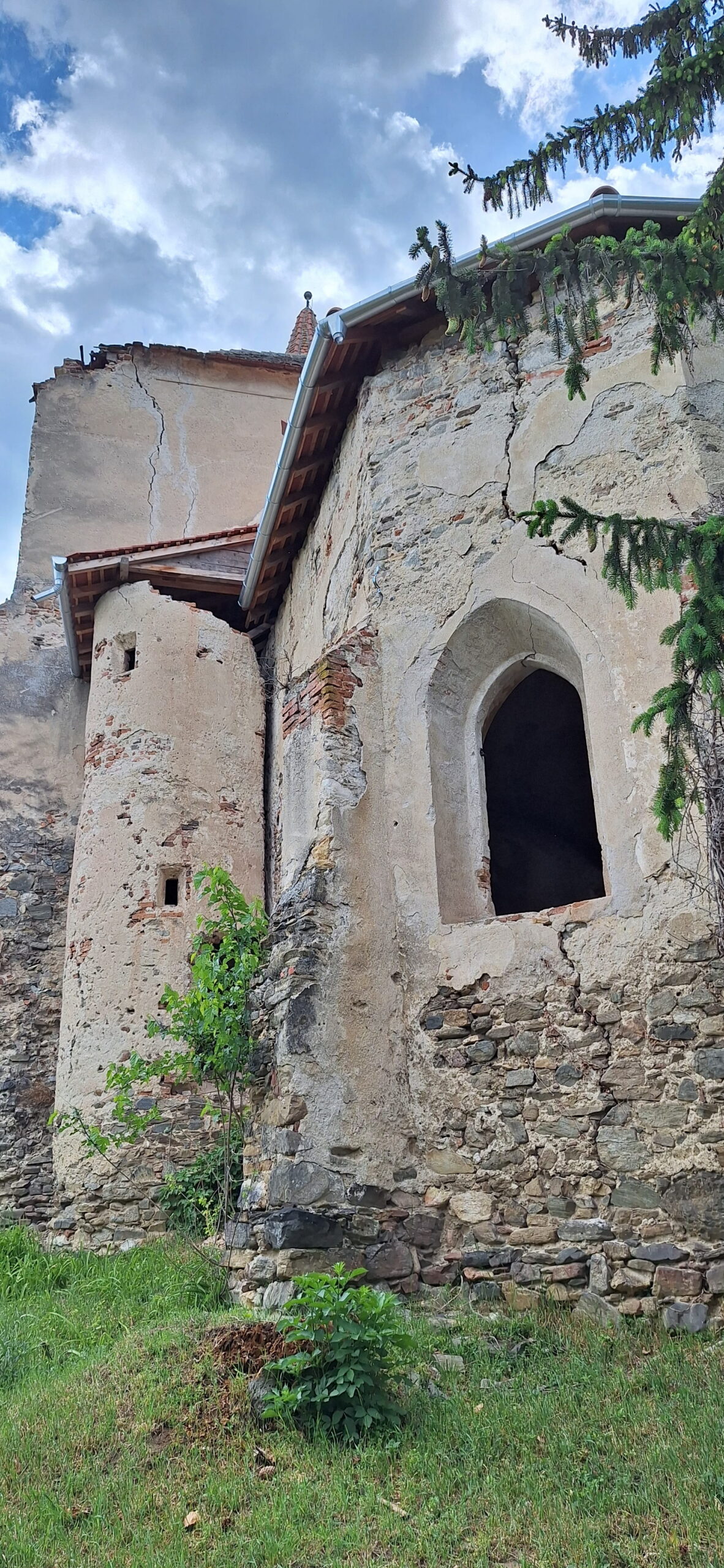
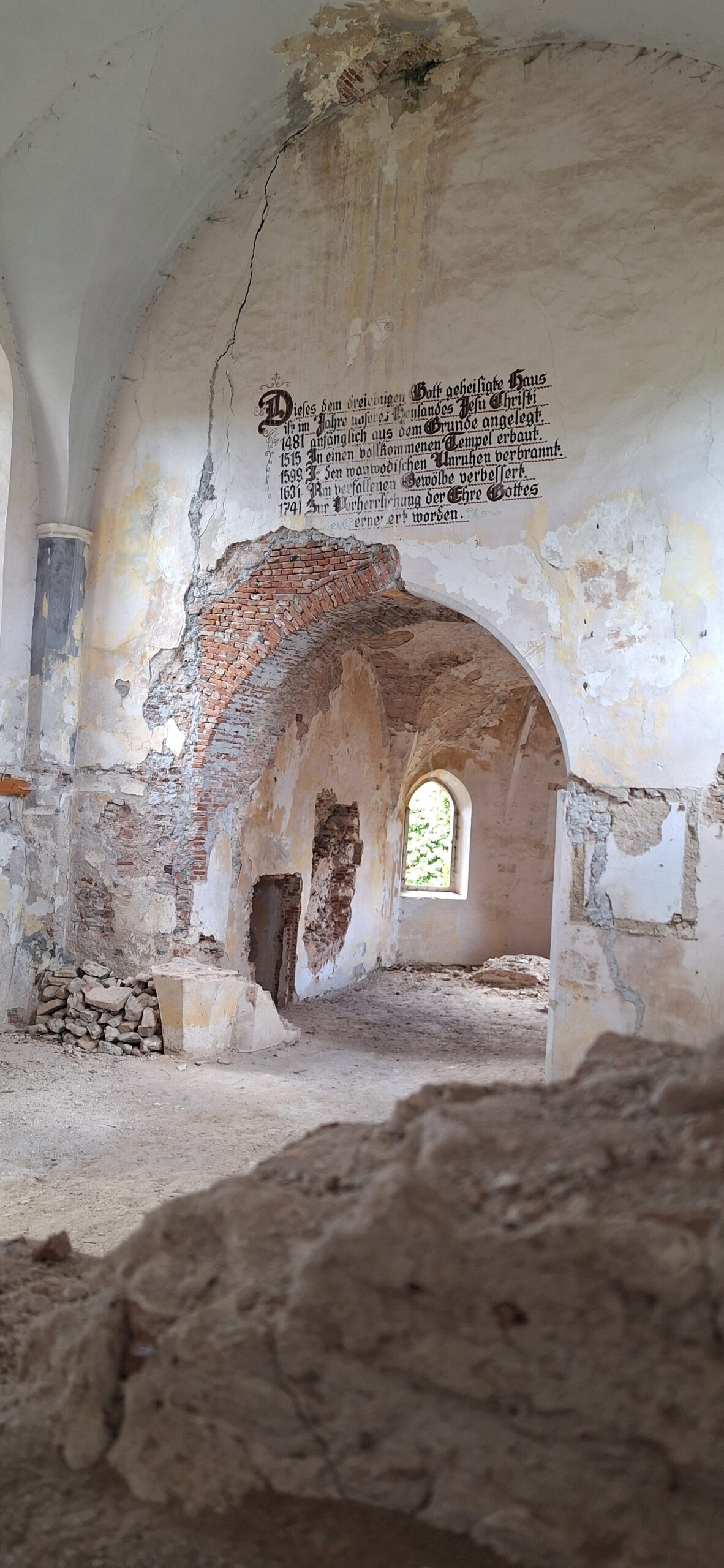
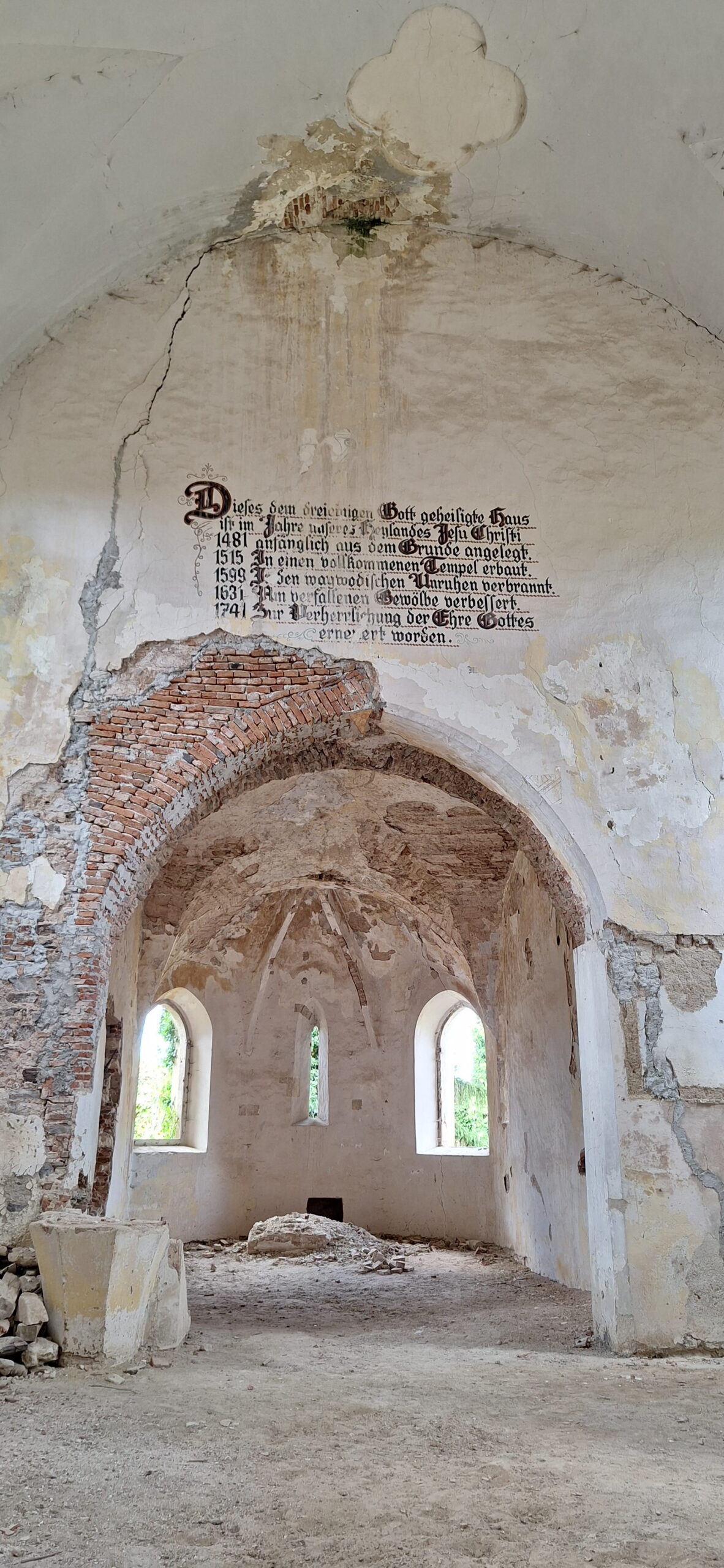
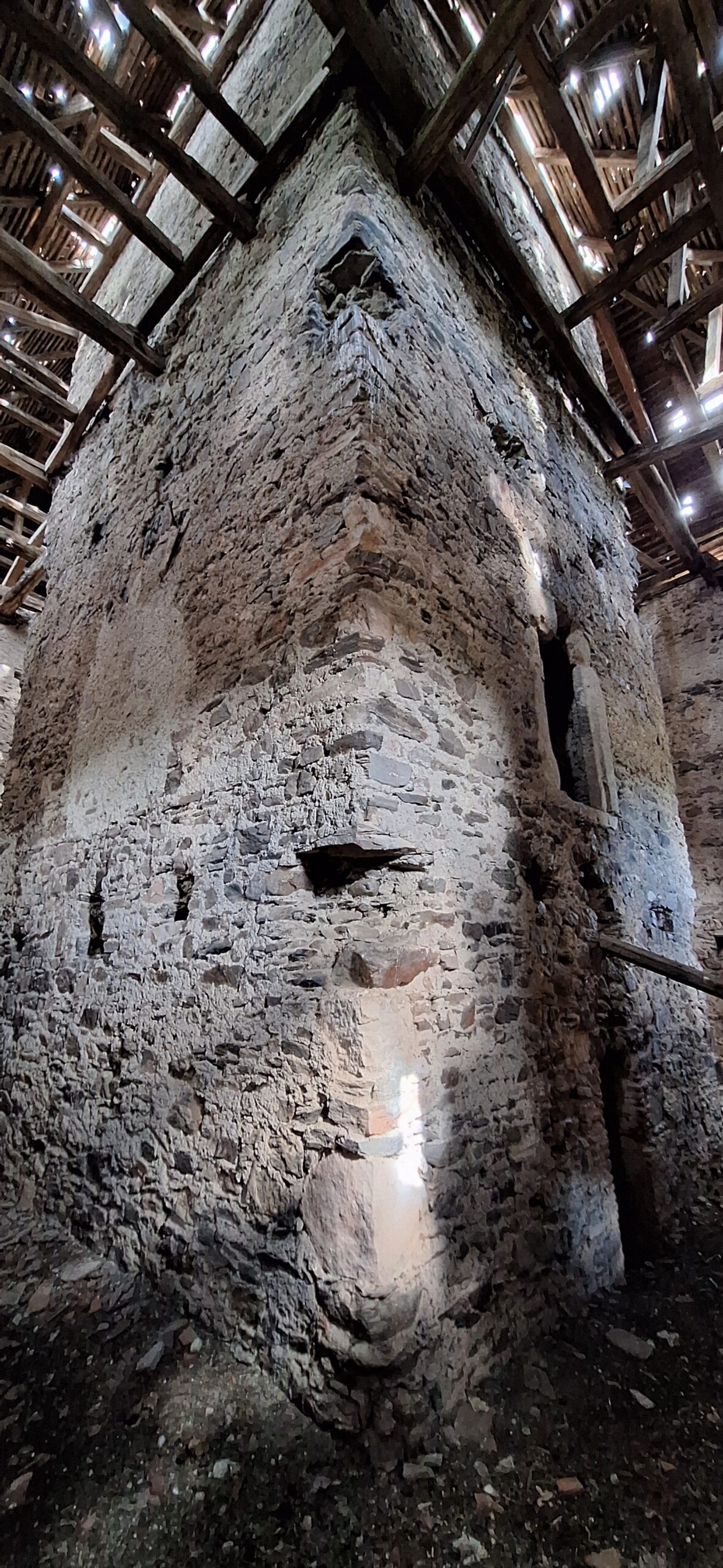
Three flanking towers were built, along with the gate tower, which has survived to this day. The old church was transformed into a Gothic hall church, while the sacristy and the sanctuary with its polygonal apse were also finished during the same period. Perhaps the most unusual architectural feature was the incorporation of the slender old bell tower into an enormous donjon that surrounds it like a mantle. A space of circa two metres separates the two structures, providing room for the defensive galleries. An inscription in German, still visible on the triumphal arch, identifies 1515 as the „year of completion”. The complex acquired its present appearance in the 19th century.
The Saxons left, the Fortified Church of Dobârca was ransacked
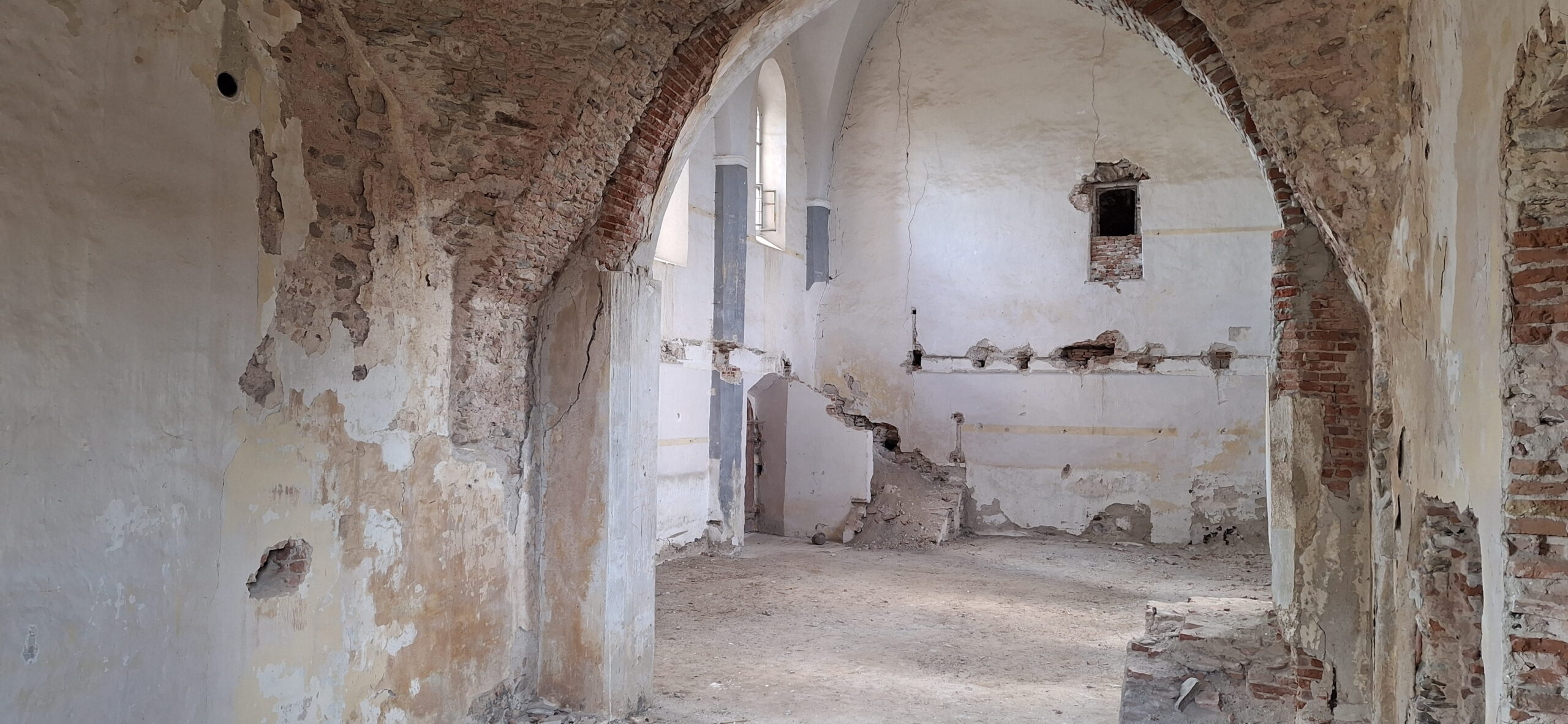
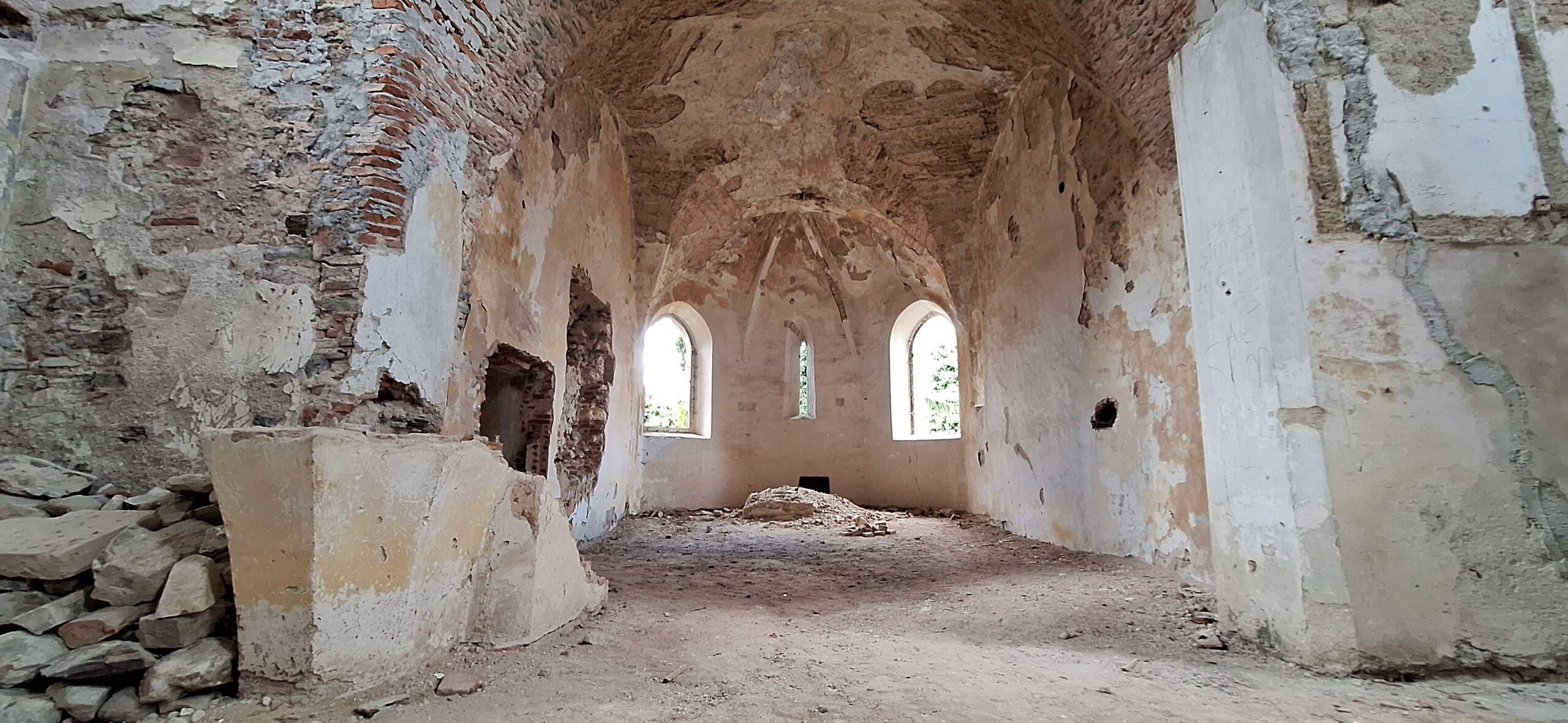
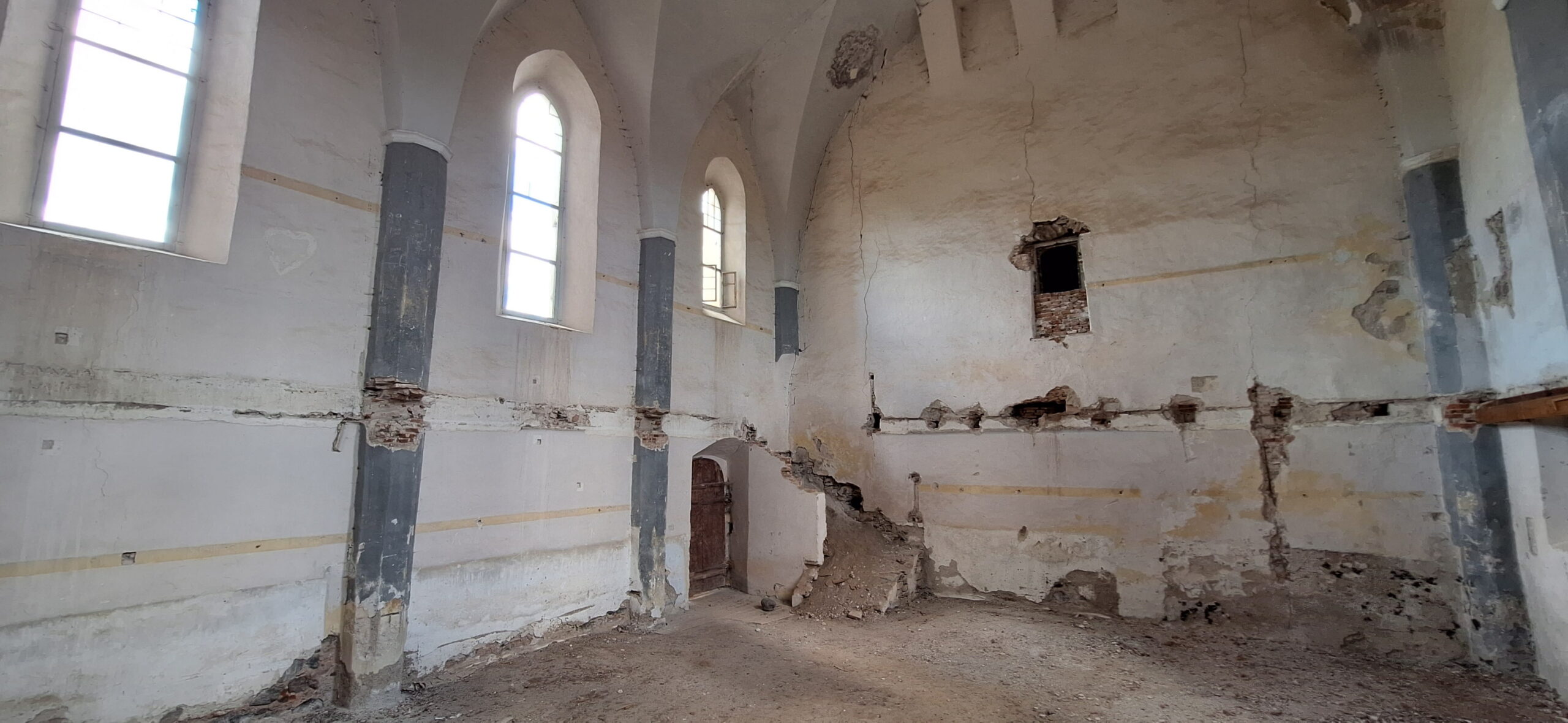
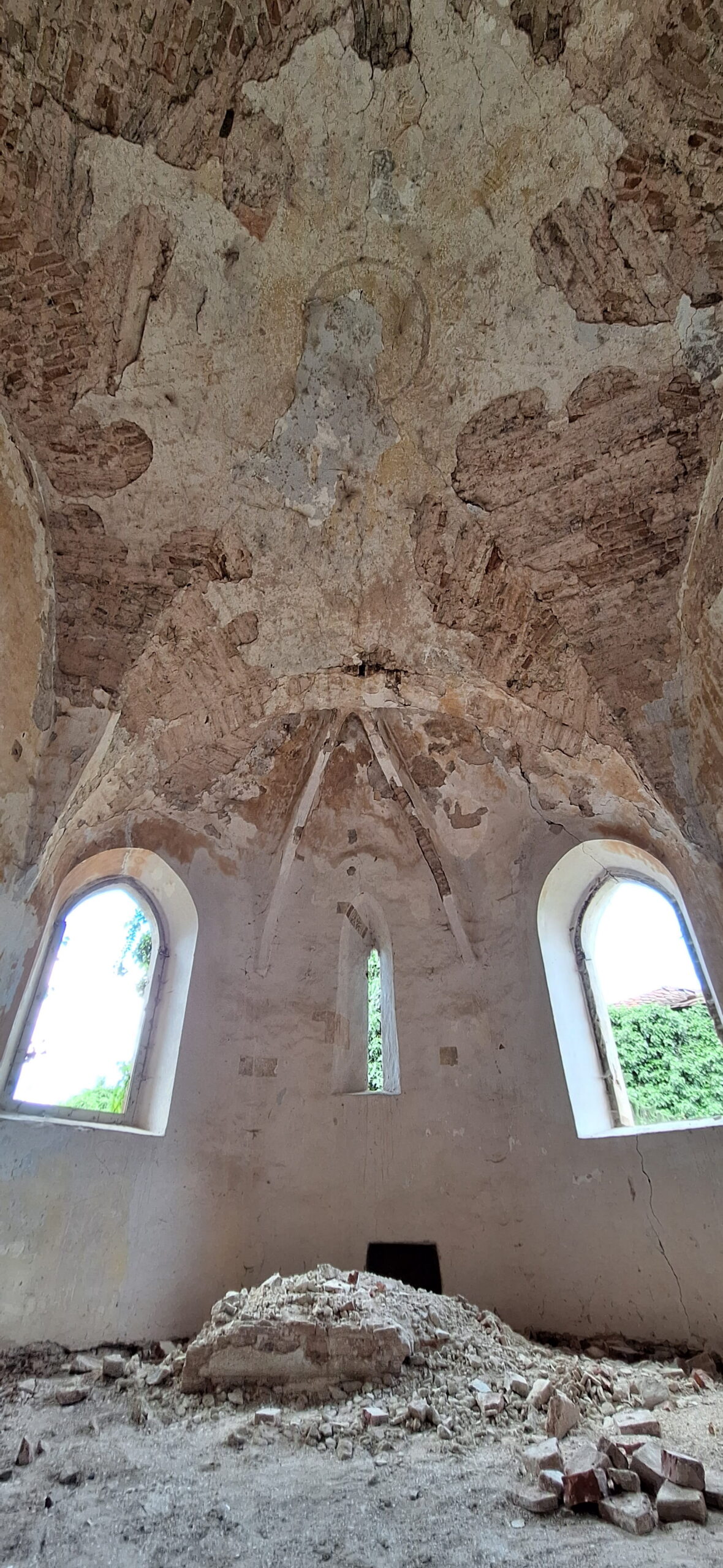
After wandering among the centuries-old graves, my heart begins to beat faster as I step beneath the crumbling gate tower. I am struck by the sheer massiveness of the church and the architectural solutions employed by the craftsmen of the time — features that make it unique in Transylvania. Yet the sight that greets me inside fills me with profound sadness. After 1989, as the Saxon population left in a mass exodus, the fortified church of Dobârca fell victim to neglect, theft and vandalism. I had already seen photographs of cows sheltering inside the church, but witnessing the full extent of the destruction with my own eyes is overwhelming.
All that remains of the pulpit is a pile of shattered bricks. Where the altar once stood, there is now nothing but rubble and dust. The painted gallery, the windows, doors, beams and all the furnishings have been turned into firewood. The floors have been torn up, and even the roof tiles and bricks from the demolished walls have been stolen. The Neo-Gothic organ built by the Rieger brothers in 1898 survives only in memory; its pipes were melted down. Old German-language church books ended up as second-hand market goods, while the stolen bell was discovered by police in a van carrying scrap metal. The altar paintings were saved by an elderly Saxon woman, who hid them in her home until they were transported to Sibiu. Many gravestones were toppled, and the graves themselves were desecrated.
The Fortified Church of Dobârca: rescue efforts doomed to fail?
The vandals and thieves were never held accountable, and the damage inflicted on the Evangelical Church of Dobârca seems irreversible. Curious to learn what had been done to save this historic monument, I discover that the interventions of the former Coordination Office for Fortified Churches failed to put an end to the thefts in 2010. In the summer of 2014, volunteers from the Kirchenburg Dobring project, the Evangelical Church of Romania, and the Phoenix and Arcus organisations joined forces to clear away the rubble. In 2017, however, the roof over the chancel and the defensive walkway collapsed, and the roof of the sacristy was also damaged.
In January 2018, a conservation project was launched with the aim of slowing the monument’s deterioration. In 2019, another rescue initiative was abandoned after construction materials were stolen. This chain of events demonstrates that interventions cannot guarantee lasting results without effective measures to protect and guard the church. Over the years, many of the old houses left behind by the Saxons have been occupied by members of the Roma community, who make up the majority of the village’s population, according to the 2021 census. At the time, the village had nearly 700 inhabitants.
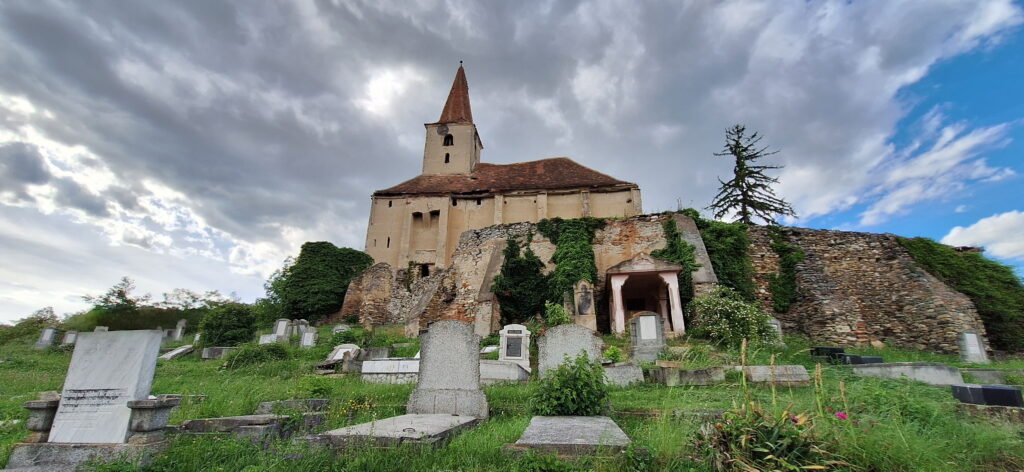
In a rural setting marked by poverty, saving a historic monument seems to be the last thing on the minds of a community struggling to make ends meet from one day to the next. As I read a 2016 article entitled „God Has Left the Church in Dobârca”, I realise that it was not God who abandoned His house, but people who turned their backs on respect for their ancestors and the heritage they left behind. Had it stood in Germany or Austria, the fortified church of Dobârca would have been a tourist magnet. In Romania, it continues to decay in silence, becoming a ruin that the world refuses to see, seemingly indifferent to its fate.